Stories of Impact
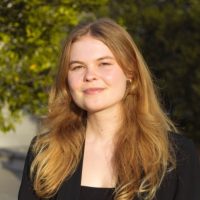
Sophia Ware
I have spent the last decade of my life searching for the longest lever.
My search began in middle school on the pavement of San Francisco’s financial district. I lay there, my body painted in fake blood, screaming for BlackRock to divest from fossil fuels. We called it "street theater," and alongside the Extinction Rebellion and the Sunrise Movement, I believed that if we made enough noise, the system would change. But a year later, the emissions were still rising, and the CEOs we targeted were still ignoring us. I realized then that I needed to stop performing for empty seats and start talking to the people sitting in them.
This realization initiated a pivot that defined my early career: from outside agitator to insider strategist. I moved from protest to policy, lobbying city councils for climate action plans. Yet, I hit another wall: bureaucracy. Policies without funding are hallucinations. When I saw that the City of Piedmont’s ambitious climate goals were stalled by a lack of capital, I founded Students 4 Solar. By partnering with small businesses to raise $60,000, we didn't just advocate for green energy; we installed it.
That experience taught me a lesson that led me to the Environmental Economics and Policy program at Berkeley: Economics is the language of power. If the barrier to change is money, then the lever must be money.
I arrived in Copenhagen expecting to study a different economic model. I thought I would learn about tax rates, labor unions, and the mechanics of the welfare state. But what I found was not just a different economy; it was a different culture of capitalism.
In the United States, we are often taught that capitalism follows immutable laws of physics: supply, demand, and shareholder primacy. It is a system of organized scarcity and competition. But in Denmark, capitalism felt different. It was slower, softer, and more human. Walking through Frederiksberg or merging into the silent, synchronized flow of Copenhagen’s bicycle traffic, I realized that the Nordic model is not just a policy set; it is a social contract written into the asphalt.
The bike lane is not merely infrastructure; it is a physical manifestation of democratic egalitarianism—a "common-pool resource" managed through high social trust rather than regulation alone. This was my first glimpse of my new thesis: Capitalism is not just a political and economic system; it is cultural one.
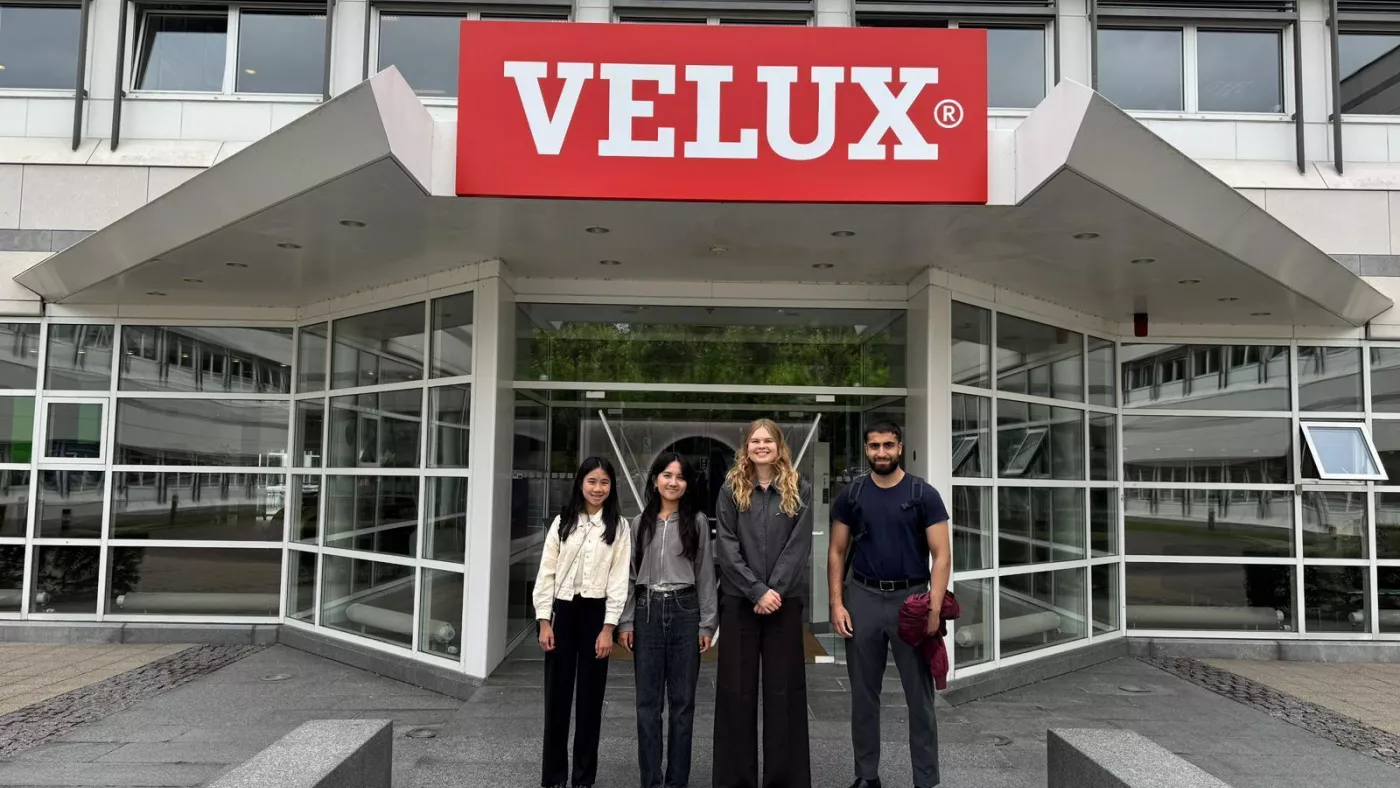
This theoretical insight collided with reality during the Velux Case Competition, a business school case challenges put on by CBS as part of my course on circular ecnomny. My team was tasked with bringing circular economy principles to a global window manufacturer. Immediately, we encountered the "head vs. heart" tension described in sustainability literature. A teammate pushed for a strictly technical solution—using AI to optimize logistics. It was a classic "inside-the-box" approach, prioritizing efficiency within the existing linear system.
I argued for a different path, grounded in Biomimicry and Cradle-to-Cradle (C2C) design frameworks. Nature does not have a waste problem because every output is an input for another system. Drawing on this, I proposed "Biomimetic Glass"—windows featuring UV-reflective patterns inspired by spider webs to prevent bird collisions and hydrophobic nanostructures mimicking lotus leaves for self-cleaning.
The challenge wasn't technical; the technology existed. The challenge was cultural. We had to convince the judges that a window wasn't just a static product to be sold, but a dynamic part of an ecosystem. We won the competition not because our math was better, but because we told a story that aligned with the Danish cultural value of holism—integrating the technical "head" with the narrative "heart."
That victory crystallized what I had sensed in Robert Strand’s classroom. The success of the Nordic model isn't just about high taxes funding a safety net. It’s about a cultural software that views trust as an asset and long-termism as a fiduciary duty.
In the U.S., our version of capitalism is often myopic, driven by quarterly returns and a "scarcity logic" that erodes trust. We prioritize speed; Denmark prioritizes coherence. As I prepare to return to the Bay Area to work in sustainable finance and impact investing, I am bringing back more than just a case competition trophy. I am bringing back a new definition of the lever.
I used to think the lever was protest. Then I thought it was policy. Then I thought it was capital. I now realize that capital is merely the fuel; culture is the engine.
We cannot simply copy-paste Danish policies into the American political landscape. But we can import the cultural behaviors that make those policies work. We can design investment vehicles that value long-term resilience over short-term extraction. We can design products that mimic nature rather than deplete it. And we can design institutions that widen the circle of "we."
Copenhagen changed what I believe is possible. It proved that a system based on trust, care, and circularity is not a utopian fantasy—it is a working prototype. My job now is to use the tools of finance to help build that culture at home. The longest lever is not money; it is the imagination to redesign the system itself.
Sophia Ware
B.S. Environmental Economics - Class of 2026
Subscribe
SDF email updates (about once a month)
Follow
Find us on social platforms


Scan Design Foundation
The Scan Design Foundation by Inger & Jens Bruun was established by the Bruuns to promote and strengthen the relationship between their native Denmark and their adopted home, the United States.
US Foundation
7724 35th Ave NE
Seattle, WA. 98115
Danish Foundation
Hedesvinget 22, 9520 Skørping
scandesignfonden.dk
Cookie Policy | Terms & Conditions
© Scan Design Foundation 2026. All Rights Reserved.
Who We Are
Vision & Mission
Staff & Board
Our Story
Contact
What We Support
Advancing Danish American Relations
Projects & Partners
Strategic Framework
Sharing Our Work
Our Grant Investments
Research & Reports
Information for Students
Updates


