Stories of Impact

Anders Tornsø Jørgensen
In 2022, Danish journalist Anders Tornsø Jørgensen participated in the Scan Design Foundation's Danish Intern Exchange Program at the Museum of Danish America. During his internship, Anders traveled across Iowa documenting stories of Danish-American communities and the people who have helped preserve Danish heritage in the United States.
You can read about that experience in his SDF story, "It Takes a Village (and a Bunch of Norwegians)."
In May 2026, Anders returned to Elk Horn to cover Tivoli Fest and the community's response to renewed international attention on Greenland and Danish-American identity. The resulting article was published in the Danish newspaper Politiken.
The article appears below with permission.
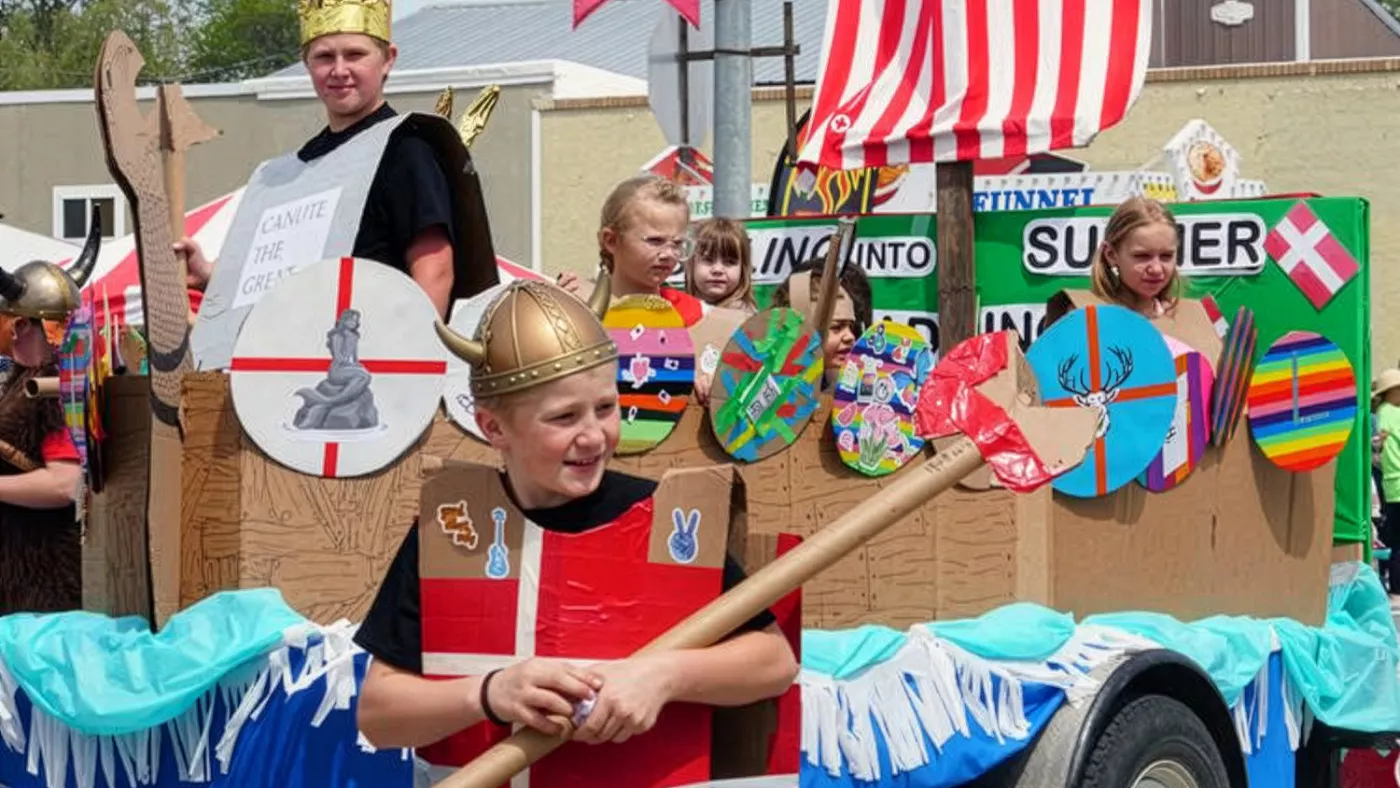
A Viking ship on wheels rolls down the main street in Elk Horn, Iowa.
From the deck, children in horned helmets toss candy to people along the sidewalk, while families in camping chairs wave small Danish and American flags in the summer heat. The same flags hang from the lampposts throughout the small prairie town, founded by Danish emigrants more than a century ago.
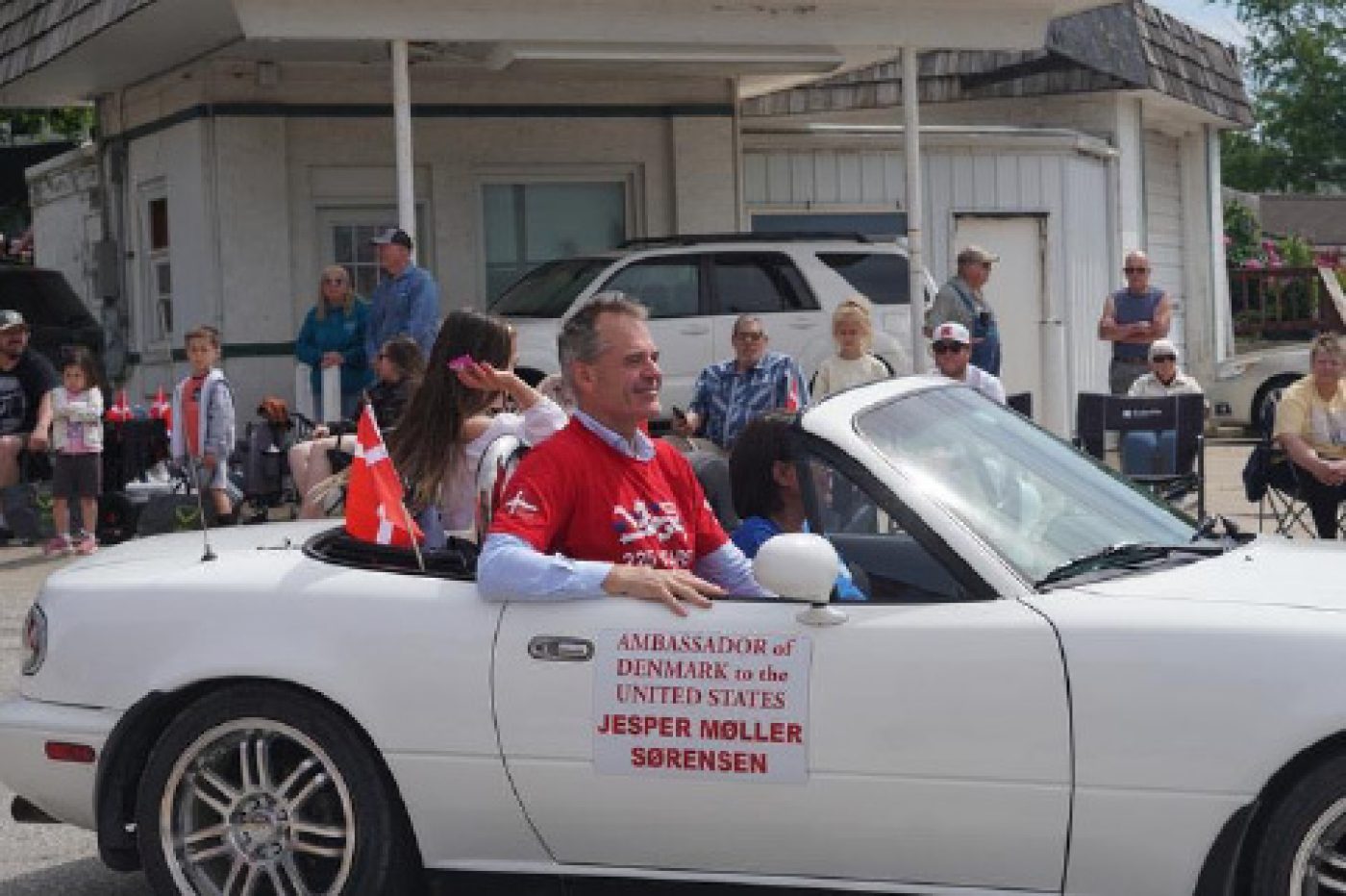
Farther up the route, Denmark’s ambassador to the United States glides through town in a white convertible, waving to the crowd.
It is the annual Tivoli Fest in Elk Horn.
One weekend each May, the little town turns into a street festival celebrating Danish heritage. Æbleskiver and medister sausages are handed over the counter in industrial quantities, folk dancers stomp through the streets in wooden clogs, and Vikings clash, plastic swords in hand.
As far back as 13 years ago, Elk Horn became known in Denmark through the DR documentary series ’Danmark på prærien’ (Denmark on the prairie), which followed the town’s residents in the run-up to and during Tivoli Fest. But beneath the celebrations lay a big worry: that Danishness was slowly fading from the little town.
This year, a more existential unease hangs over the festivities. How do you celebrate your Danish roots when the U.S. president, again and again, talks about taking over Greenland
In front of the Museum of Danish America stands Steve Rold. Behind him, the museum rises with a red-tile roof, half-timbered façade, and white walls. Inside, the story is told of teDanes who left their homeland and settled in the United States.
The Danish American, well over six-foot-six, was born and raised in Elk Horn, spent 10 years as brewmaster at Fanø Bryghus, and now lives in Wisconsin – another Midwestern state with Danish roots. For this year’s Tivoli Fest, he has brewed a special festival beer called ’Dane Country’.
Beside him stands his wife, Jessica, in a Fanø costume, while their daughter wanders around in a smaller version, little Danish flags in her hands.
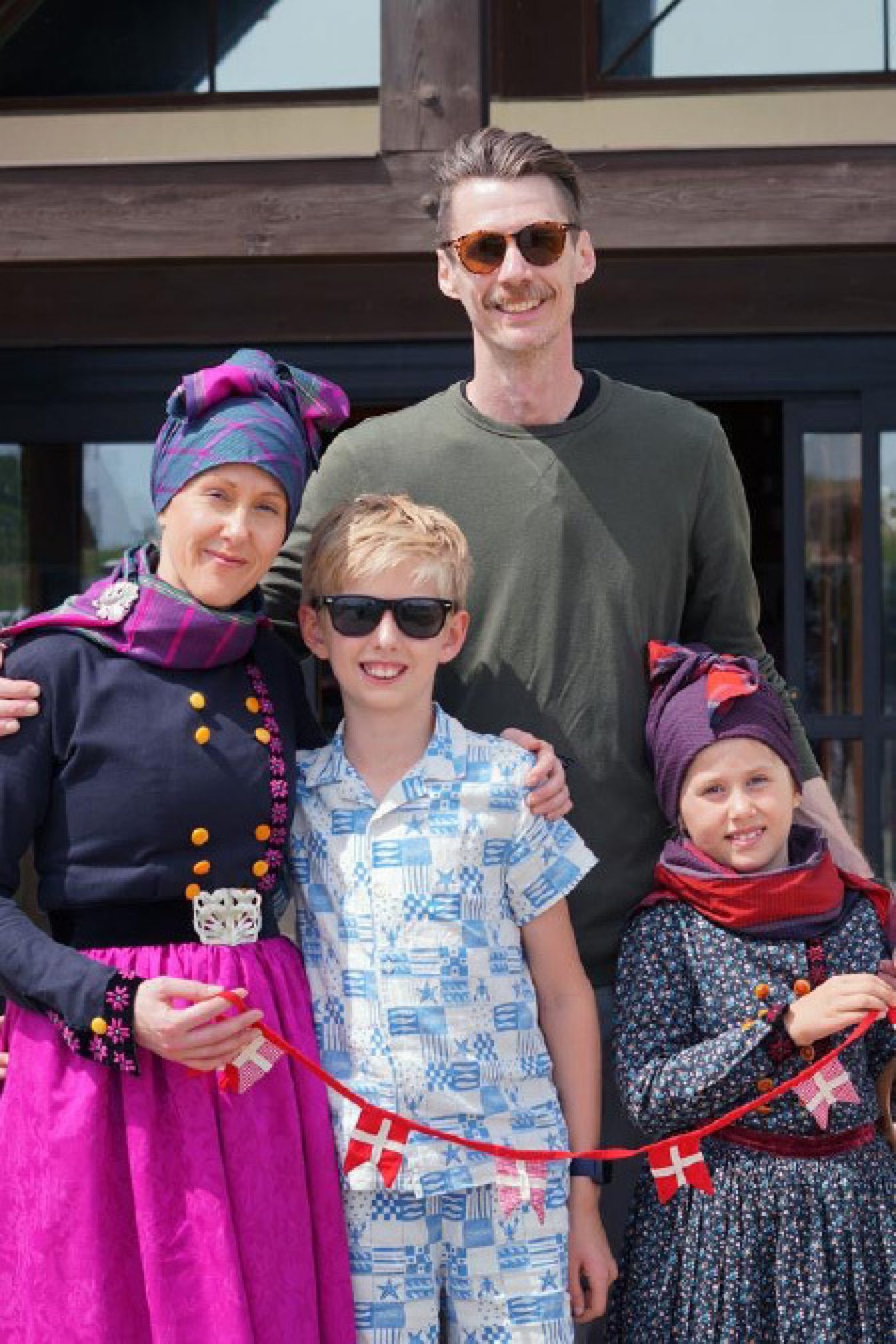
When the conversation turns to Trump and Greenland, Steve Rold does not hesitate.
"I think it’s ridiculous. Like, genuinely scary ridiculous. Keep your hands off Greenland, if you ask me", he says.
"I just hope we get to the other side of this, so it ends up being something we can laugh about, when calmer, more sensible heads take over again"
Earlier this year, the museum also raised the Greenlandic flag after Trump refused to rule out using military force to gain control of Greenland.
»I felt we needed to acknowledge that we supported Denmark’s position, given that Greenland has been part of the Danish realm for so long«, says the museum’s acting director, Erik Andersen.
Behind him, children, parents, and retirees stream toward the museum’s newest attraction: a nearly 23-foot-tall troll built from recycled wood by the Danish artist Thomas Dambo.
The troll, Fjord Færgemand, stands in a large boat as a tribute to the roughly hundred thousand Danes who emigrated to the United States.
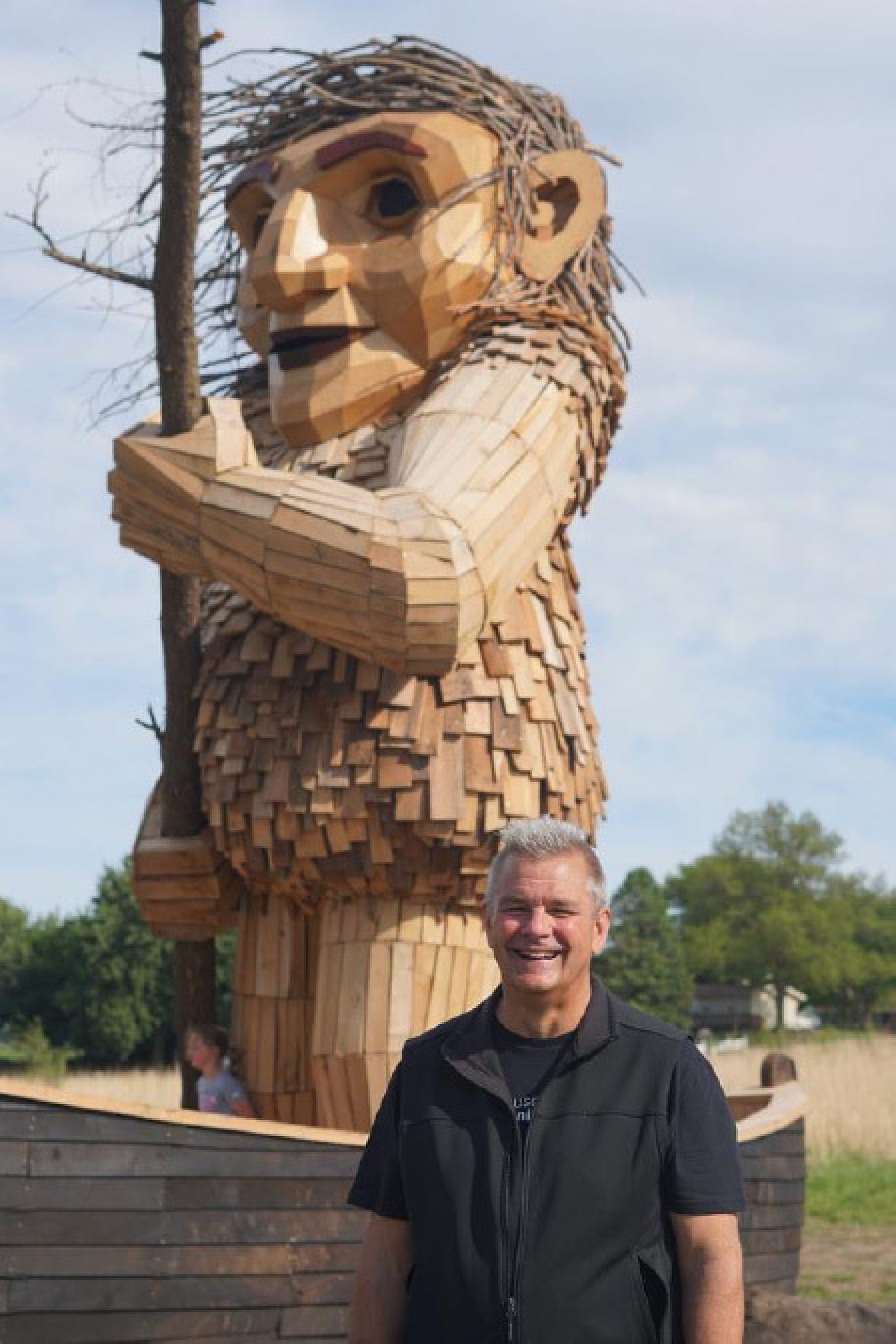
Many settled in the Midwest, where the landscape reminded them of Denmark, and where place names like Dannebrog in Nebraska, Ringsted in Iowa, and Viborg in South Dakota still testify to the Danish legacy.
Erik Andersen believes Donald Trump is overlooking the fact that the United States already has extensive military access to Greenland through the 1951 defense agreement.
"So respect that. The U.S. has already been allowed to be there", he says.
"We’re allies. My view is that we should de-escalate instead of escalating."
Next to Elk Horn’s old Danish windmill, imported from Nørre Snede in Jutland, Denmark’s ambassador to the United States, Jesper Møller Sørensen, steps up to the stage.
Across the chest of the ambassador’s red T-shirt is the number ’225’ – marking that Denmark and the United States can celebrate 225 years of diplomatic relations this year.
"Denmark is the ally of the United States that has had the longest unbroken diplomatic relationship with the United States, ever", he says from the podium.
Greenland is not mentioned.
Instead, the ambassador turns to the special bond between Denmark and the United States:
"Friendship between countries doesn’t live only in treaties, embassies, and official visits. It lives precisely in places like Elk Horn", the Danish top diplomat says.
Between 1820 and 1930, about 336,000 Danes emigrated to the United States. Economic hardship, social inequality, and the desire for religious freedom pushed Danes toward America.
Today, just over 1.1 million Americans report Danish ancestry, according to the U.S. Census Bureau.
Most settled in the Midwest, particularly in Iowa, Minnesota, Nebraska, South Dakota, North Dakota, Wisconsin and Illinois. Danish Mormons traveled to Utah.
For generations, Danish American communities preserved the language, folk dancing, church traditions, and a food culture featuring æbleskiver, kringles, and frikadeller.
When the speech ends, the audience breaks into applause. Shortly afterward, people gather around the ambassador to shake hands, take selfies, and exchange a few words.
It is the first time a Danish ambassador has attended Tivoli Fest.
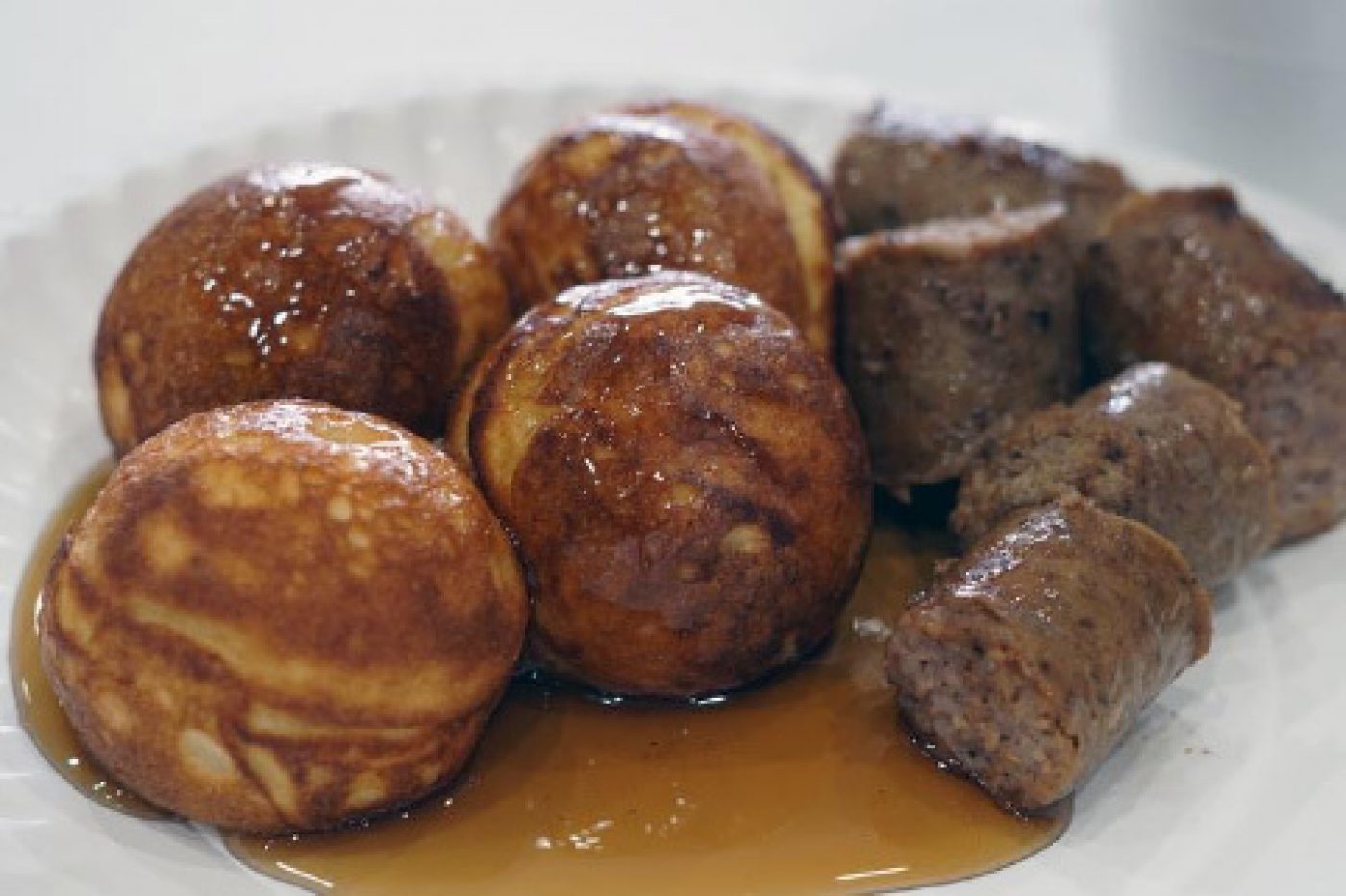
Jesper Møller Sørensen continues on to the fire station, which this weekend has been turned into a makeshift shop selling Tivoli Fest’s most sought-after specialties: æbleskiver and medister sausage.
Soon after, he sticks a plastic fork into a medister sausage and stresses that the visit to Elk Horn is not about Greenland but, above all, "is part of the celebration of 225 years of diplomacy between the United States and Denmark".
"Two hundred twenty-five years is a very long stretch. This isn’t the first time there’s been a disagreement between Denmark and the United States. But the relationship is something far bigger, deeper, and more enduring than the conflicts that can arise along the way."
Friendship between countries doesn’t live only in treaties, embassies, and official visits. It lives precisely in places like Elk HornJesper Møller Sørensen, Denmark’s ambassador to the USA
Instead, he points to how the connection between Denmark and Iowa can still be felt today. Iowa has become one of the country’s leading wind-energy states, and Danish companies have helped drive that development.
"Those historical ties haven’t just shaped our past", the ambassador says.
"They also strengthen our shared future."
Among several Republican residents of Elk Horn, the question of Greenland is met with silence or quick changes of subject.
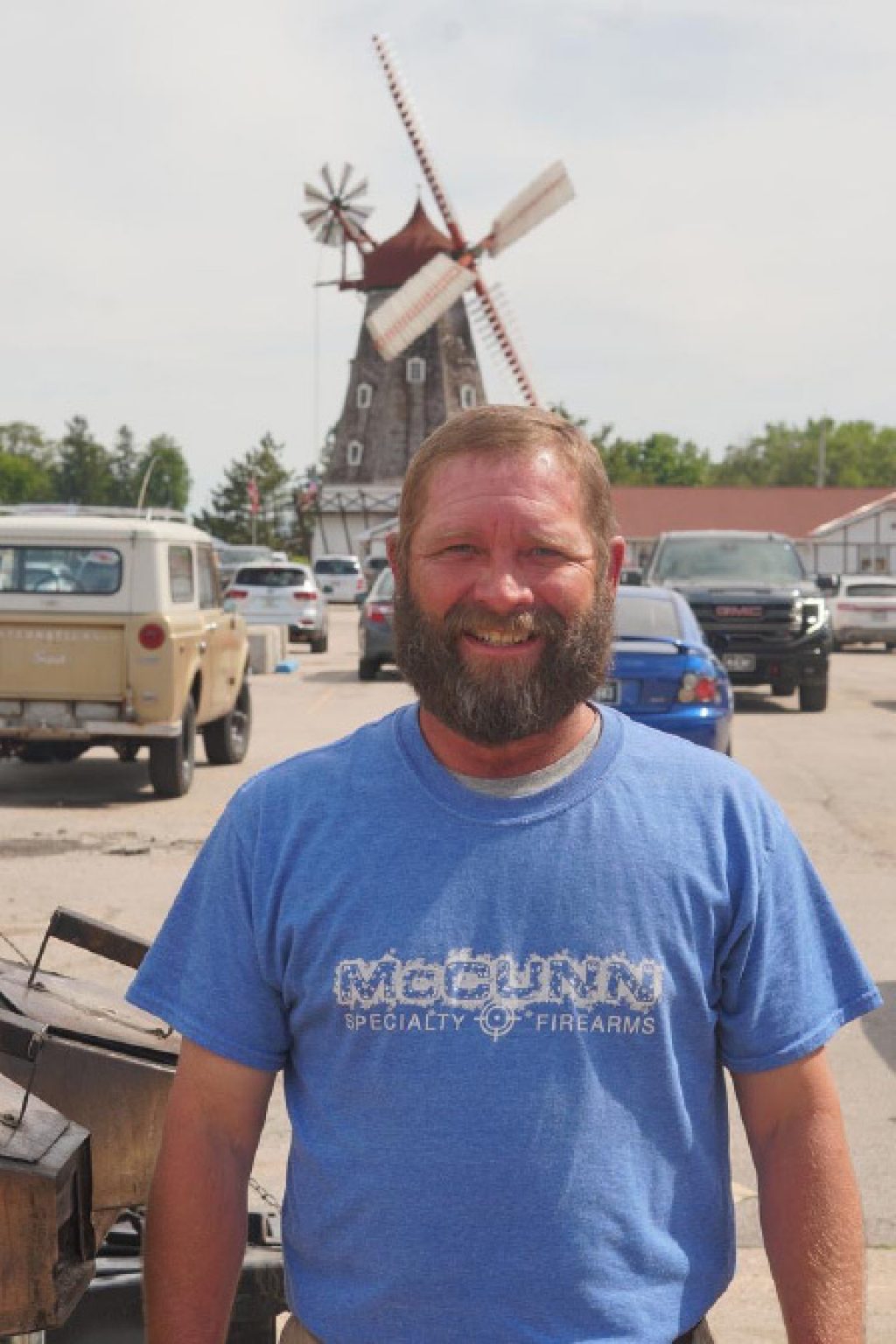
But not with Neil Christian Poldberg. Standing beside a stand selling corndogs and deep-fried Oreos, he wears a blue T-shirt advertising a gun store.
"If I were in the president’s shoes, I’d probably be looking north, too", he says.
"It’s the president’s job to protect the country."
In his view, Greenland’s location makes American ownership strategically decisive.
"Who’s going to stop China or Russia the day Greenland becomes independent?", he asks.
He believes a sensible solution will be found, though, because Trump is a "dealmaker".
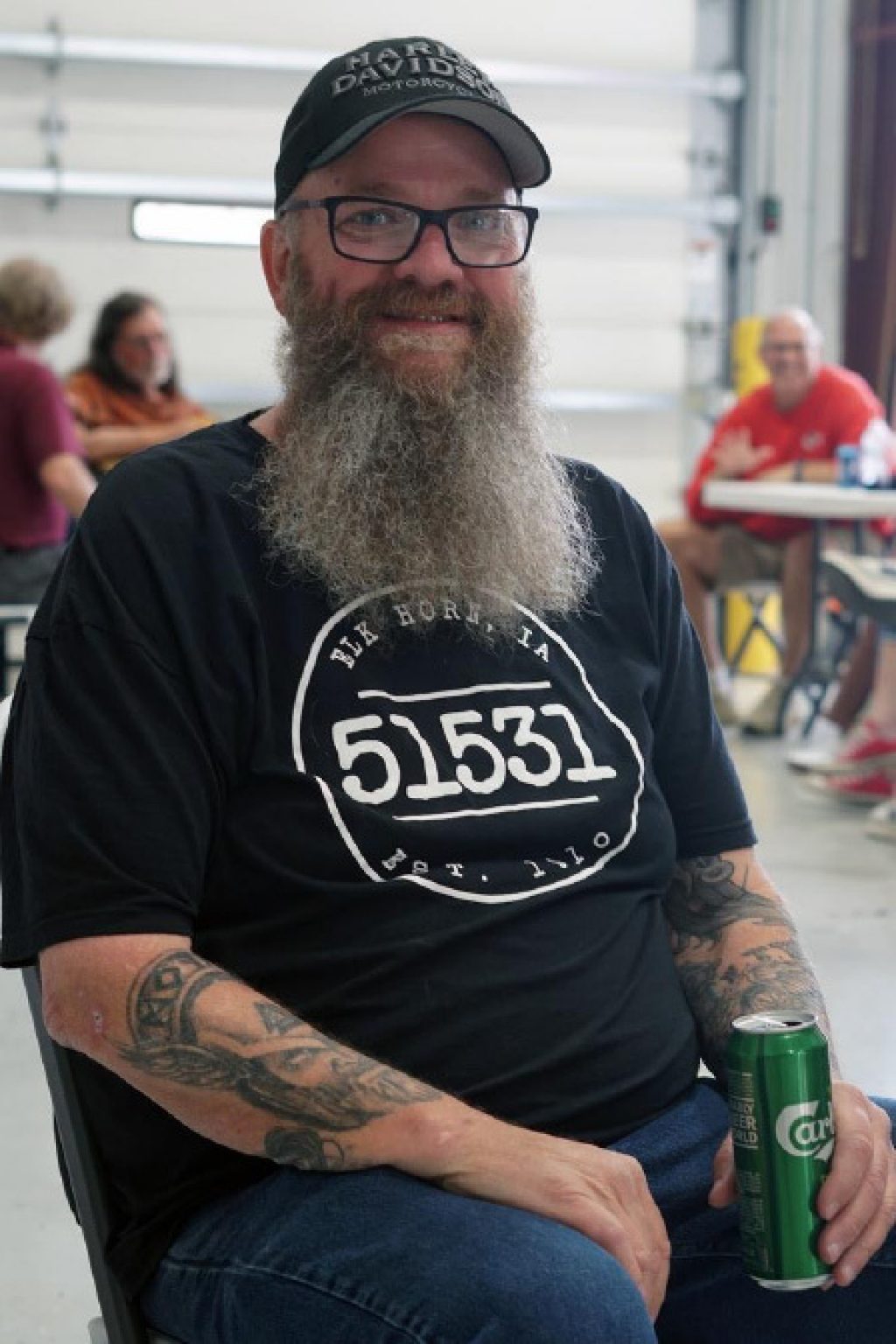
Over by the fire station, Elk Horn’s mayor, Stan Jens, sits with a cold Carlsberg in hand. With his big gray beard, Harley-Davidson cap, and tattoos up his arms, he does not look like your typical mayor. Behind him, the æbleskiver stand is shutting down after another busy day.
Despite Stan Jens’ pride of his Danish roots, Greenland does not weigh heavily on his mind.
"I don’t know that much about it. I’m not very well-educated on the subject, so I’d rather not say too much", he says.
"I really just think it should stay the way it is. Let Greenlanders keep doing what they do. If it ain’t broke, don’t fix it".
But if Donald Trump could run again, Stan Jens would vote for him without hesitation.
"As long as they don’t come for my guns, we’ll be fine", Stan Jens says.
Elk Horn lies in Shelby County, where Trump won more than 70 percent of the vote in the last election. Here, inflation and immigration mattered far more to voters than fears that Trump would revive his old wish to take over Greenland.
Danish ties
At City Hall – which this weekend has been turned into a smørrebrød and layer-cake shop – sit two people who for decades have tried to keep Danishness alive in Elk Horn and among Danish Americans across the United States.
One of them is John Mark Nielsen, the former director of the Museum of Danish America.
»One of the most frustrating things is the lack of American historical understanding of Greenland and the relationship between Denmark and the United States«, he says.
John Mark Nielsen talks about the website Greenlandfacts.org, which Danish American organizations have created to counter what they see as a widespread lack of knowledge among many Americans and misinformation from the Trump administration.
For him, the frustration is not only political. Denmark is woven into his identity – so deeply that in 2012 he was even appointed a Knight of the Order of the Dannebrog by Her Majesty Queen Margrethe II.
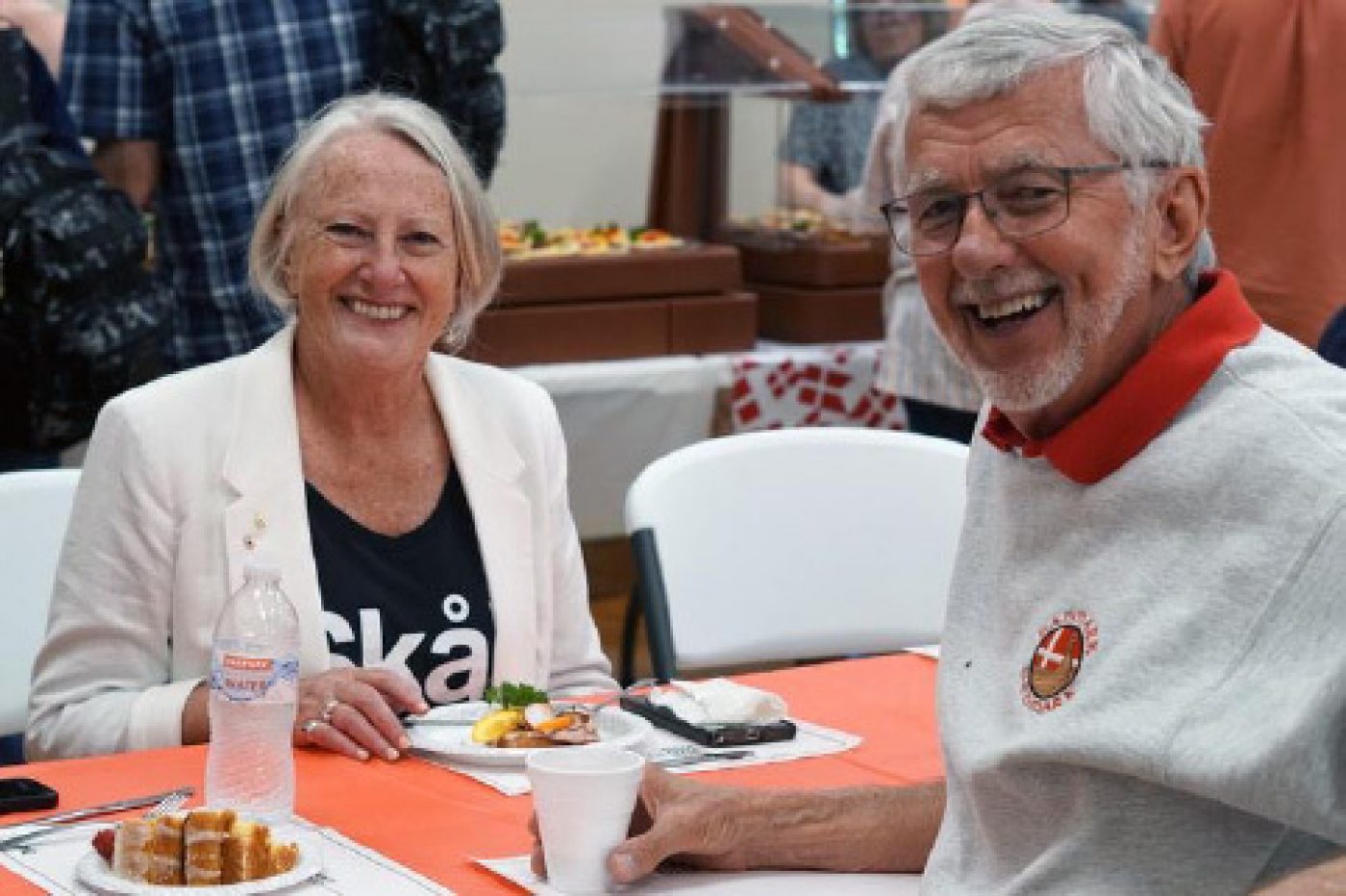
"Danish has been part of my upbringing through my grandparents, my parents, and family both here and in Denmark."
Next to him sits Lisa Steen Riggs, who for 45 years ran Elk Horn’s Danish windmill and is now the American vice president of the friendship association Rebildselskabet.
My Danish heritage is both a family story and has become my life’s workJohn Mark Nielsen, former director of the Museum of Danish America
"My Danish heritage is both a family story and has become my life’s work. My grandparents came to America hoping for a better life, but they always missed their homeland, and I grew up in a wonderful Danish American community", she says.
Elk Horn still has streets with names like Bornholm Street and Jutland Street, and every year thousands gather for Tivoli Fest. But fewer people speak Danish in daily life, and many young people head for bigger cities. In the cemetery, the names Jensen, Larsen, and Christiansen still stand close together, while the same names are becoming fewer on mailboxes around town.
That is why Lisa Steen Riggs is also following the conflict over Greenland with unease. She fears that the storm between Denmark and the United States could create distance in a bond that Danish Americans, for generations, have tried to keep alive.
"No matter what happens in the world today, I hope we can preserve our cultural heritage and maintain close ties to Denmark. Our friendship has worked beautifully for the past 225 years."
Elk Horn has about 600 residents.
The town’s two best-known landmarks are the Danish Windmill and the Museum of Danish America.
The windmill originally comes from Nørre Snede in central Jutland and was built in 1848. In 1975, it was dismantled, shipped across the Atlantic, and rebuilt in Elk Horn the following year, in time for the United States’ Bicentennial in 1976.
This year, the windmill can celebrate its 50th anniversary in Iowa — the same year the United States marks its 250th anniversary.
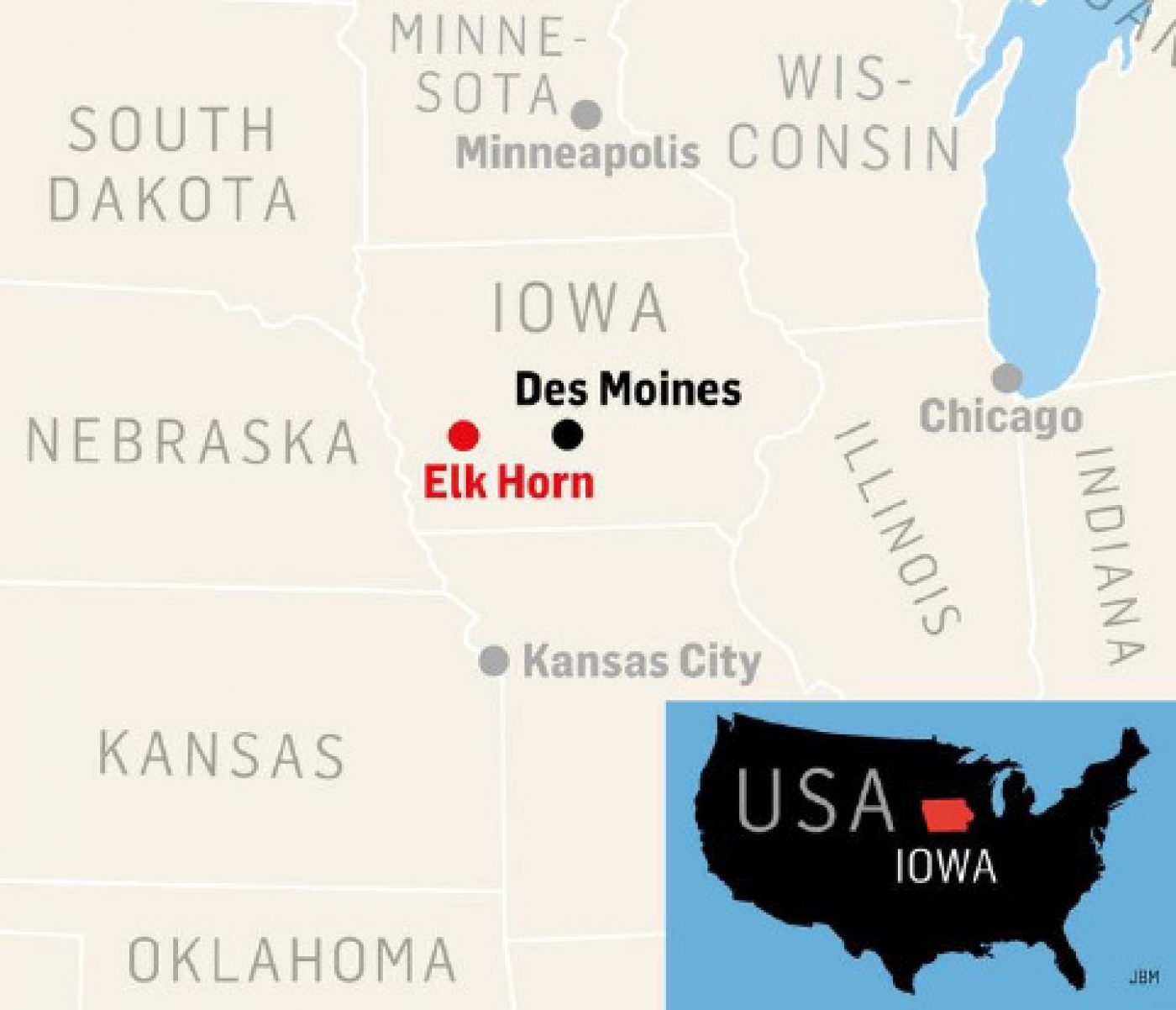
Since 1994, the Museum of Danish America has told the story of Danish immigrants in the United States and today serves as a gathering place for Danish American cultural heritage, with exhibitions, archives, and cultural events.
Anders Tornsø Jørgensen
Journalist
Subscribe
SDF email updates (about once a month)
Follow
Find us on social platforms


Scan Design Foundation
The Scan Design Foundation by Inger & Jens Bruun was established by the Bruuns to promote and strengthen the relationship between their native Denmark and their adopted home, the United States.
US Foundation
7724 35th Ave NE
Seattle, WA. 98115
Danish Foundation
Hedesvinget 22, 9520 Skørping
scandesignfonden.dk
Cookie Policy | Terms & Conditions
© Scan Design Foundation 2026. All Rights Reserved.
Who We Are
Vision & Mission
Staff & Board
Our Story
Contact
What We Support
Advancing Danish American Relations
Projects & Partners
Strategic Framework
Sharing Our Work
Our Grant Investments
Research & Reports
Information for Students
Updates


