Stories of Impact

Mikayla King
This article was originally written for WWU News by Mikayla King, who covers the College of Science and Engineering and Woodring College of Education for University Communications. The original story was published on April 27, 2026.
Ten WWU (Western Washington University) students returned from Denmark last September with new perspectives on sustainable, community-focused infrastructure that they brought to life in building and designing projects for the Bellingham waterfront.
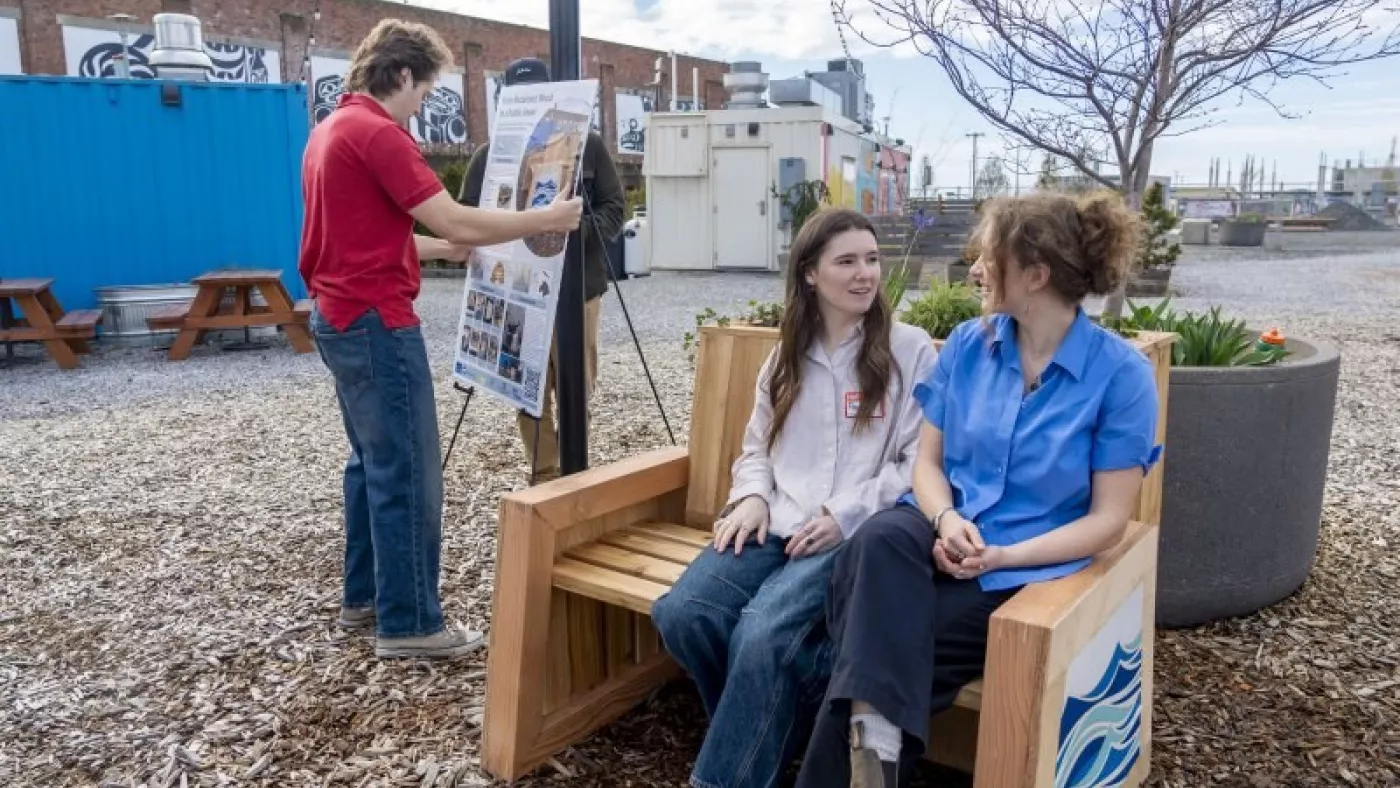
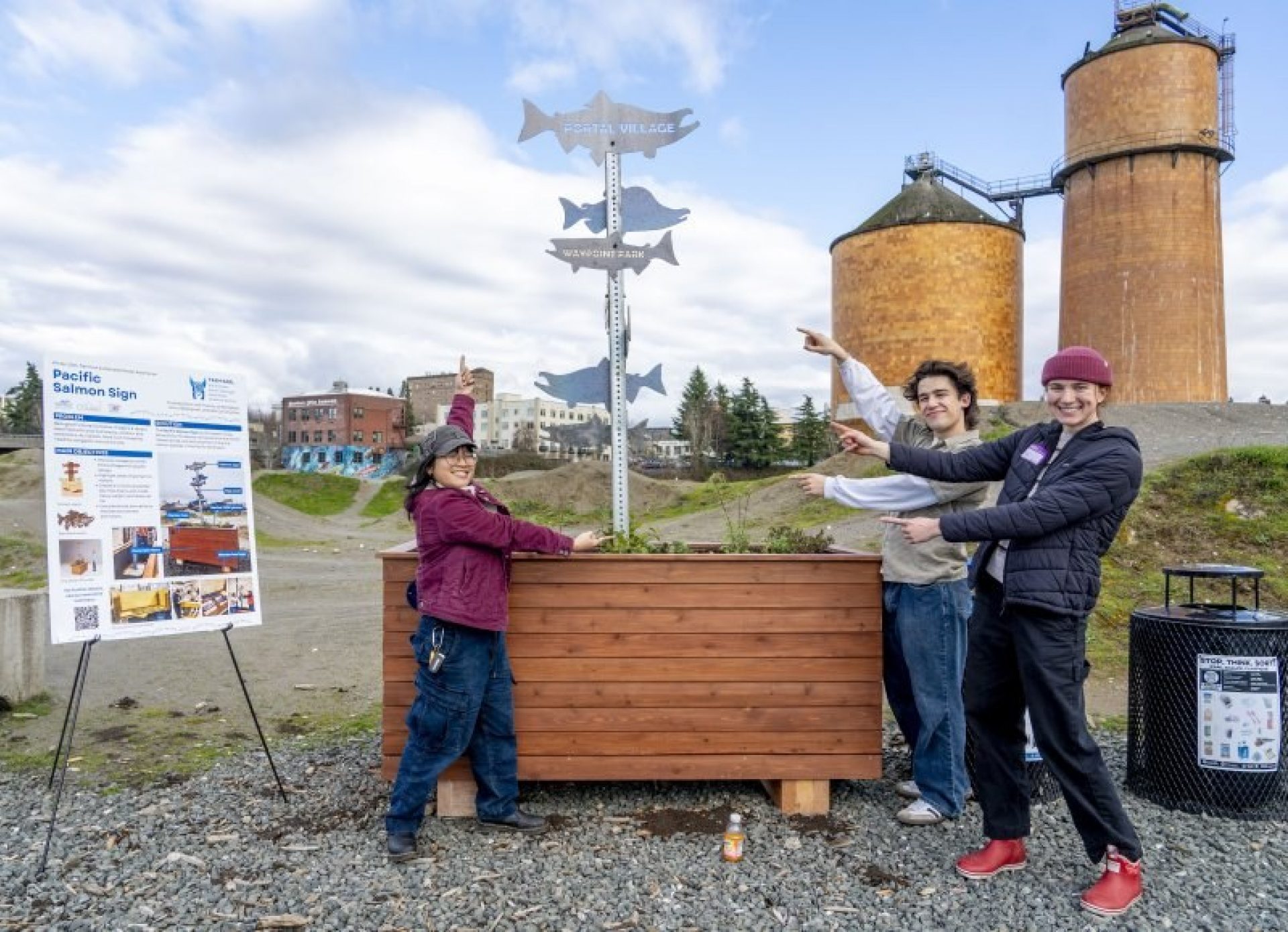
The students built and installed three projects at Bellingham's Portal Container Village, unveiled March 20 after seven months of work and a two-week study abroad trip to Copenhagen and Samsø.
This year’s WWU student cohort was the first of an ongoing collaboration between WWU, COurban Design Collective and the Scan Design Foundation (SDF) with community partners including the Port of Bellingham, the City of Bellingham and RAM Construction.
The students were split into groups to build three projects designed to improve wayfinding and additional seating at the waterfront Portal Container Village — needs that had been identified by the Port of Bellingham.
The teams created three projects:
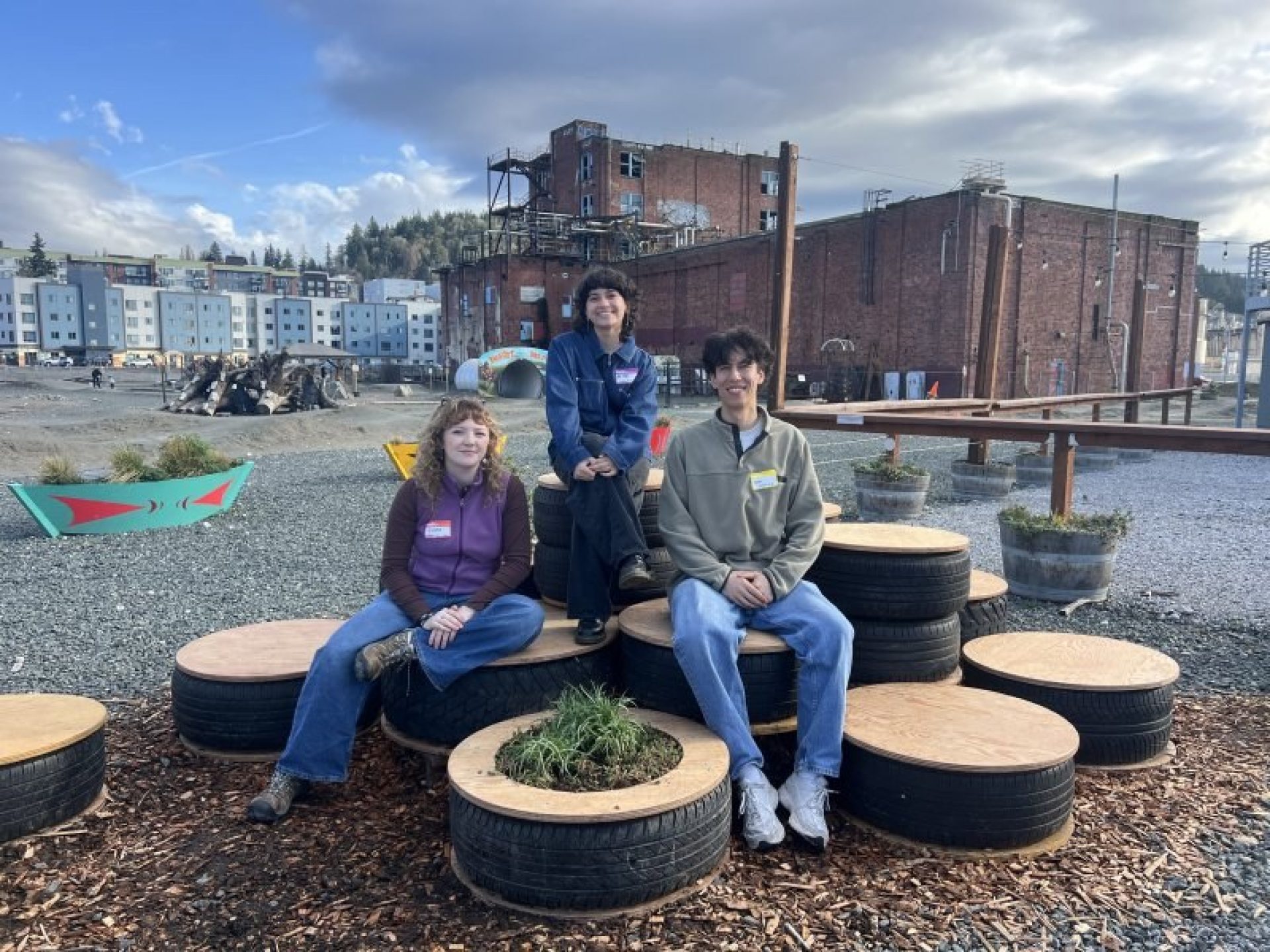
Each project was built with a focus on sustainable and community-driven design.
“We tried to use recycled wood if possible, and locally sourced wood if it was not,” Bengston said about his team’s bench design. “We also attempted to find ways to avoid using hardware where possible.”
For example, Bengston’s team used a splining method to join their bench armchairs, which offers an eco-friendlier method of fitting wood joints together, he said.
Materials that couldn’t be repurposed or recycled were donated to students by RAM construction, and RAM CEO Mike Hammes, a WWU alum, acted as one of the mentors to students when they returned from Denmark.
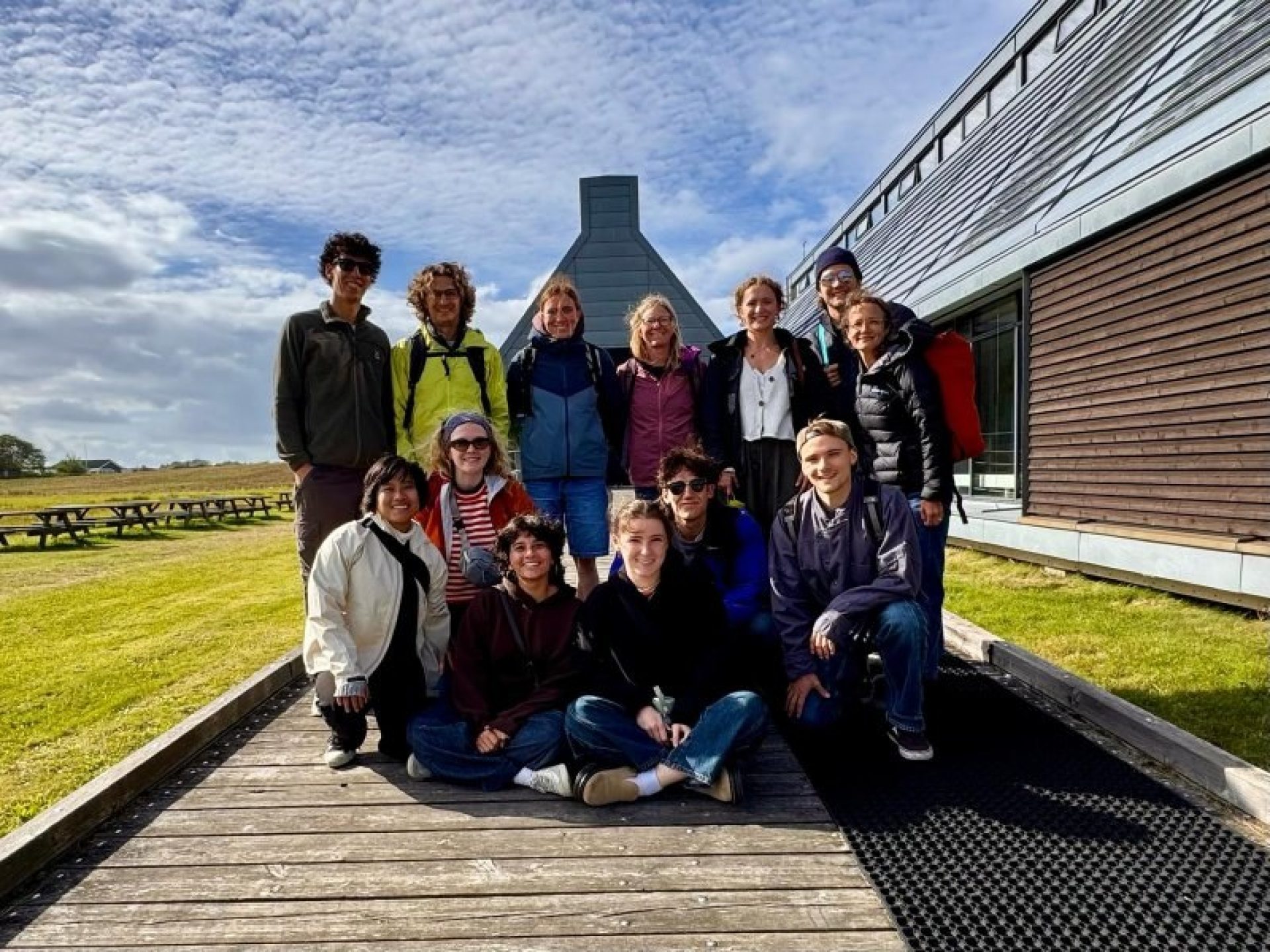
The trip to Denmark in September 2025 was fully funded by the Scan Design Foundation, a Seattle-based nonprofit with a mission to advance Danish American relations through cultural exchanges focused on environmental sustainability.
The students spent two weeks in Denmark, a country known for its community-oriented design, and the students spent much of that time on a bike.
Bicycling is one of the primary modes of transportation in Denmark, and big cities like Copenhagen are designed to be navigated via bikes rather than cars.
“The bike lanes were wider than the car lanes, and they were super protected and safe,” Nichols explained.
COurban led local pre- and post-study tour workshops and the two-week immersive study abroad program, which included educational site visits, bicycle and walking tours, workshops and time for individual exploration. Students explored the city of Copenhagen during their free time, experiencing one of the World’s most livable cities and world-class bicycle and pedestrian infrastructure. The group also visited the sustainable island of Samsø, where they learned about community-led sustainable design processes, clean energy, and how the island has become energy positive at the Samsø Energy Academy.
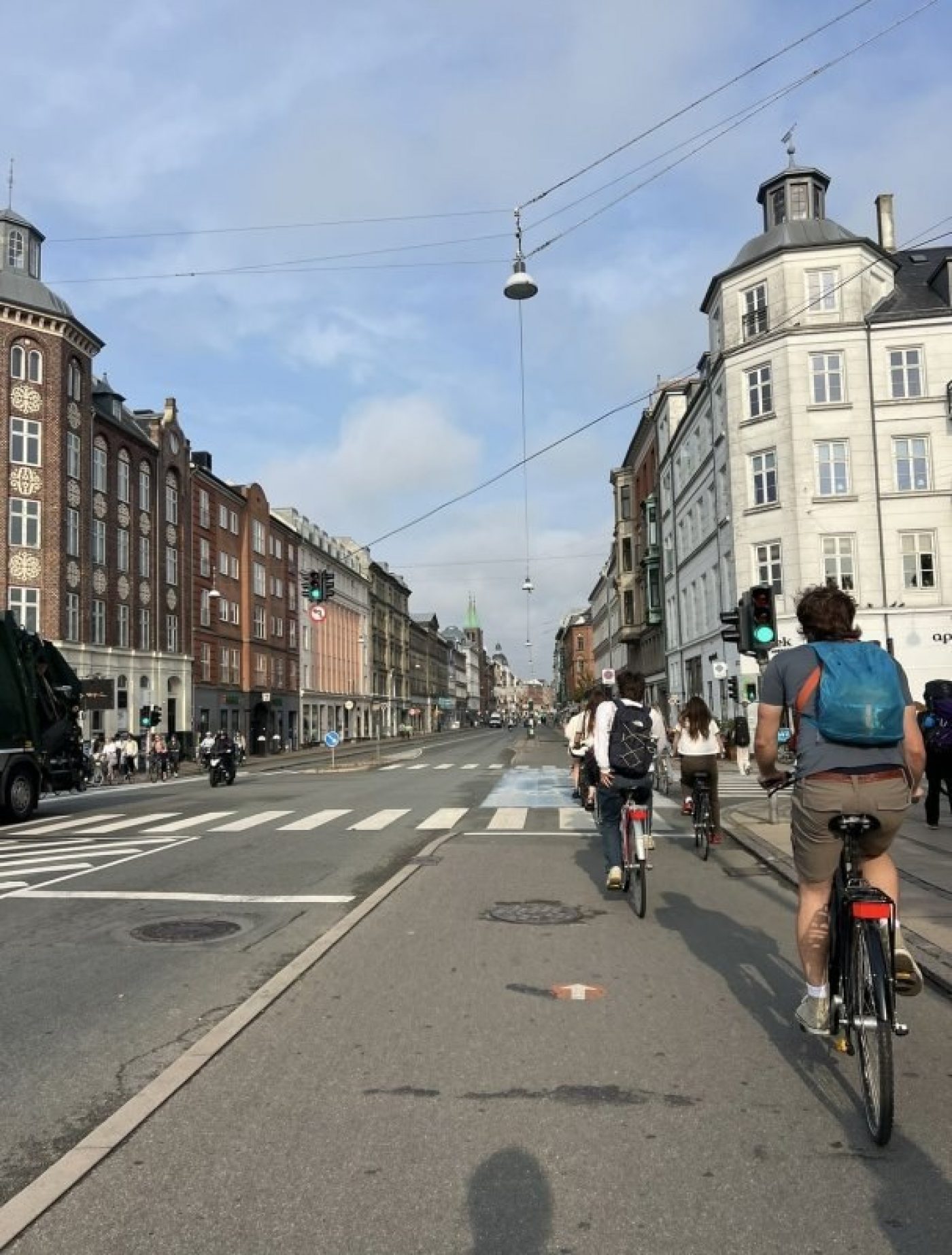
“When riding a bike, you get to see so much more of what the landscape is and how the people are. It feels a lot more like you're interconnected with the community,” Comstock said. “It was really cool to just live like how the people live in Copenhagen.”
Students visited sustainable public spaces, makerspaces and community gardens and met with industry leaders and experts to explore how Denmark incorporates sustainability and community into every aspect of their urban design.
One of the public parks they visited was the courtyard of a home for the elderly and housed a petting zoo with farm animals, hosted daycares and featured community public art projects.
Allowing all community members to contribute to shared spaces created a sense of ownership within the community, Comstock said.
“Seeing how important it is to have a community work together and to give them that space to work was honestly a new concept to me,” she said. “We have community gardens here, yeah, but this was completely different. It all seems so homemade, and you don't want to disrupt this community because they put so much time into it.”
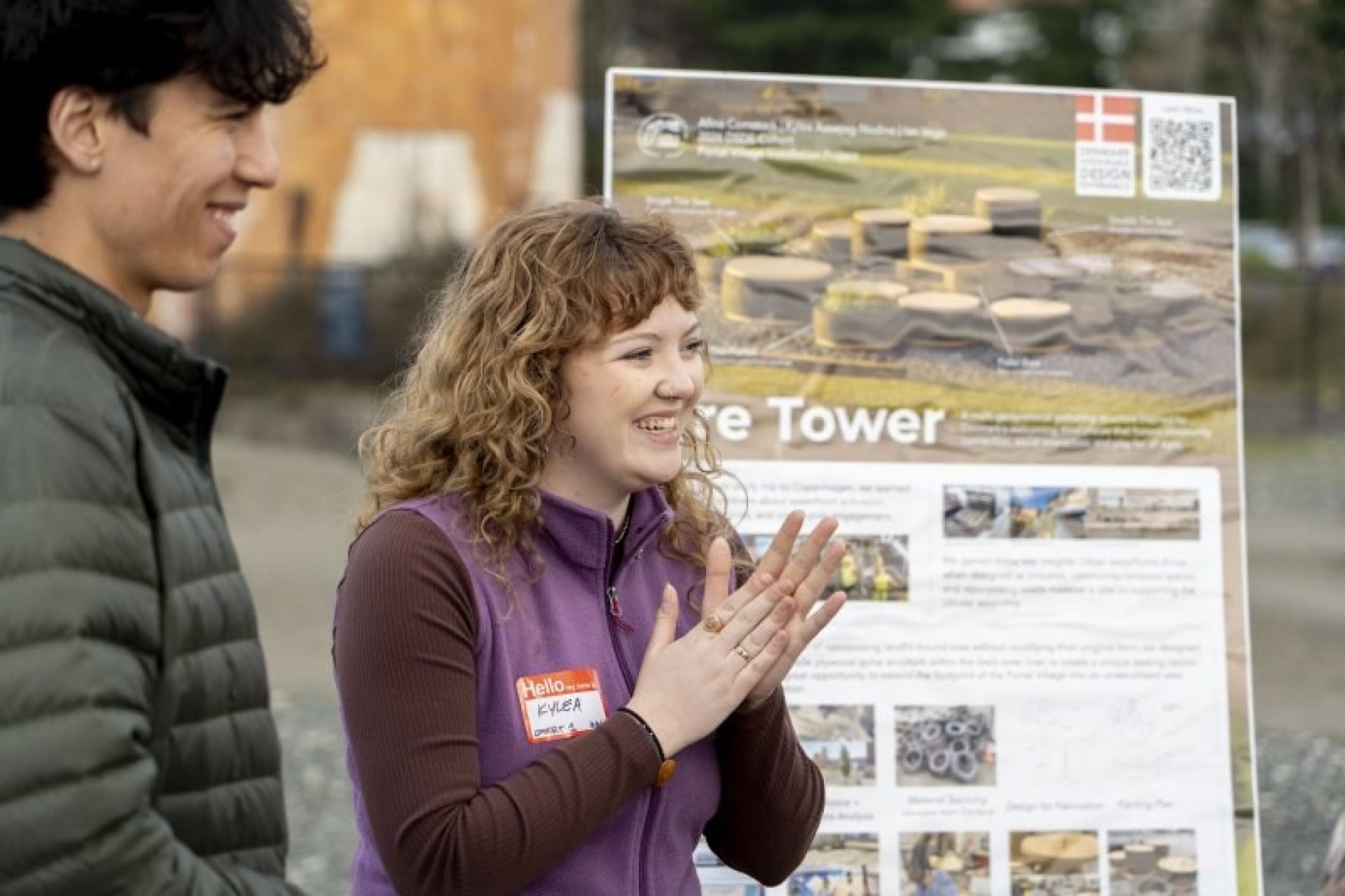
Nichols’s group took another lesson from these shared spaces: the importance of having a place for people to relax and come together.
“We wanted to create a place for people to linger,” Nichols said about her team’s bench design. “In Denmark, we saw a lot of the idea that public spaces and even transitory spaces like sidewalks are a place for people to linger, relax, enjoy and bond with each other.”
Denmark is a global leader in the study and cultivation of public life, which has been systematically studied there since the 1960s.
The Scan Design Foundation regularly partners with COurban and Katy Scherrer, a landscape architect and community planner who leads the COurban U.S. office. COurban is an international urban design collective based in Copenhagen, with a U.S. office in Bellingham.
Previously, The Scan Design Foundation sponsored two City and Port of Bellingham COurban Masterclass Programs focused on redeveloping the Downtown Waterfront District in 2018 and the Climate Protection and Community Resilience Program in 2022.
The Downtown Waterfront Portal Container Village and Pump Track were inspired by the 2018 Masterclass program, which recognized the importance of placemaking and co-creating the public space with the local community, Scherrer said. COurban has since worked with the Port on interim community uses for the waterfront public spaces, including site plans for the pump track, container village and Trackside in 2019 and public benches with Lummi Nation artist, Jason LaClair, in 2024.
“With WWU, and our local partners, we have provided students with an experiential learning and immersive hands-on opportunity while benefiting the Bellingham community,” Scherrer said.
The partnership with the Scan Design Foundation and COurban gave many students the opportunity to study abroad who otherwise would not be able to fit into their academic coursework, Associate Professor of Engineering Jill Davishahl said.
Davishahl and fellow Associate Professor of Engineering John Misasi led the students on their trip to Denmark and acted as mentors throughout the project’s completion.
The curriculum for engineering students is intensive, and many required classes are offered once a year. This means students often can’t study abroad for a full quarter without significantly delaying their graduation, Davishahl said.
While the trip was designed for engineering students, the opportunity was open to Engineering and Design and Sustainable Design majors with an emphasis on interdisciplinary learning.
“The program offers real experience,” Davishahl said. “They're learning about how to talk to people who are in the industry and to think about the community that they're designing for, rather than just doing a project in the class.”
Davishahl, Misasi and Scherrer will bring another cohort to Denmark this September and continue their partnership with the city, RAM Construction and the port to improve Bellingham’s waterfront.
To keep up to date with the students’ time abroad and project progress, follow the Denmark Sustainable Design Experience’s Instagram, @denmarkdesignwwu.
This article was originally written for WWU News by Mikayla King, who covers the College of Science and Engineering and Woodring College of Education for University Communications. The original story was published on April 27, 2026.
Mikayla King
Western Washington University Communications
Subscribe
SDF email updates (about once a month)
Follow
Find us on social platforms


Scan Design Foundation
The Scan Design Foundation by Inger & Jens Bruun was established by the Bruuns to promote and strengthen the relationship between their native Denmark and their adopted home, the United States.
US Foundation
7724 35th Ave NE
Seattle, WA. 98115
Danish Foundation
Hedesvinget 22, 9520 Skørping
scandesignfonden.dk
Cookie Policy | Terms & Conditions
© Scan Design Foundation 2026. All Rights Reserved.
Who We Are
Vision & Mission
Staff & Board
Our Story
Contact
What We Support
Advancing Danish American Relations
Projects & Partners
Strategic Framework
Sharing Our Work
Our Grant Investments
Research & Reports
Information for Students
Updates


